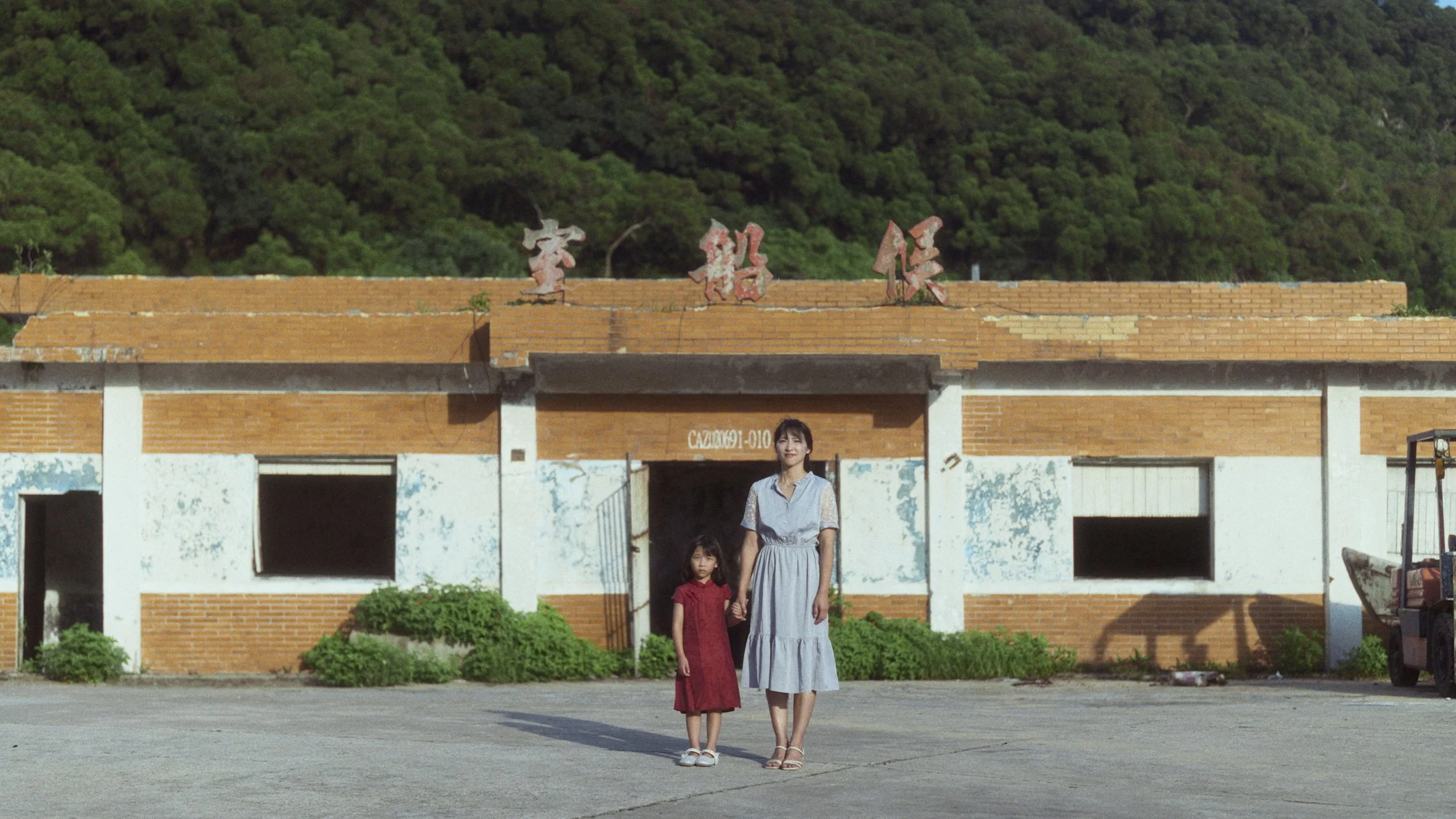
Lin Yi-Chi (b.1986) is an artist and filmmaker based in Taipei. Working primarily with moving images, experimental film, and video installation, Lin’s recent practice focuses on postwar diasporic experiences, marginalised histories especially from archipelagos like Kinmen, Matsu, or Green Island in Taiwan. Through fieldwork involving oral histories, sound collection, and spiritual practice, she transforms moving images into a medium of re-enchantment, summoning marginalised voices to reforge connections across nationalities, histories, and collective memories.
She is currently pursuing a PhD in Fine Arts at Taipei National University of the Arts and holds two master degrees in Fine Arts and Filmmaking. Her work has been presented at the International Film Festival Rotterdam (IFFR), Melbourne International Film Festival (MIFF), Jogja Biennale, Jakarta Biennale, Taiwan Art Biennial, Taipei Fine Arts Museum, and Jim Thompson Art Center in Thailand. She has received the Grand Prize of the Pulse Prize in the United States and an Honorable Mention at the Taipei Arts Awards, and was a finalist for the Taishin Arts Award.
Artist statement
My practice explores how our daily lives have been shaped by postwar histories in Asia. The imprints left by war, militarisation, migration and political orders have never disappeared. Instead, they are embedded in language, family history and individual identity in everyday life, from one generation to another. I am particularly keen to focus on those histories and memories that sit along the blurred boundaries of what defines a nation, unveiling a non-linear, diasporic experience through a mixed-heritage narrative.
My work often begins with long-term field research, encounters and conversations, spending extended periods of time with people. I work with oral histories, sound, moving images, dreams and reenactment, but I do not seek to fill the gaps in history with another narrative. Rather, I am interested in preserving its ruptures, silences and conflicting memories, and in making them perceptible again through disjunctions between documentary and fiction, sound and image, and different temporalities. For me, moving images are not a means of proving what happened in the past, but of making visible and audible the ways in which the past continues to act upon the present.